Pico laser in Singapore: what it treats, how sessions work, and what to check
A neutral guide to picosecond laser treatment: how it works, common uses, session structure, risks, regulation, and what to check before booking in Singapore.
Pico laser is one of the more talked-about pigment treatments in Singapore, and also one of the most misunderstood. This guide explains, in plain English, what the technology actually does, what clinics tend to use it for, what a course of treatment usually involves, and the risks worth understanding before you start. It is general information for your research only — not medical advice, and not a quote. What is right for your skin can only be decided with a doctor.
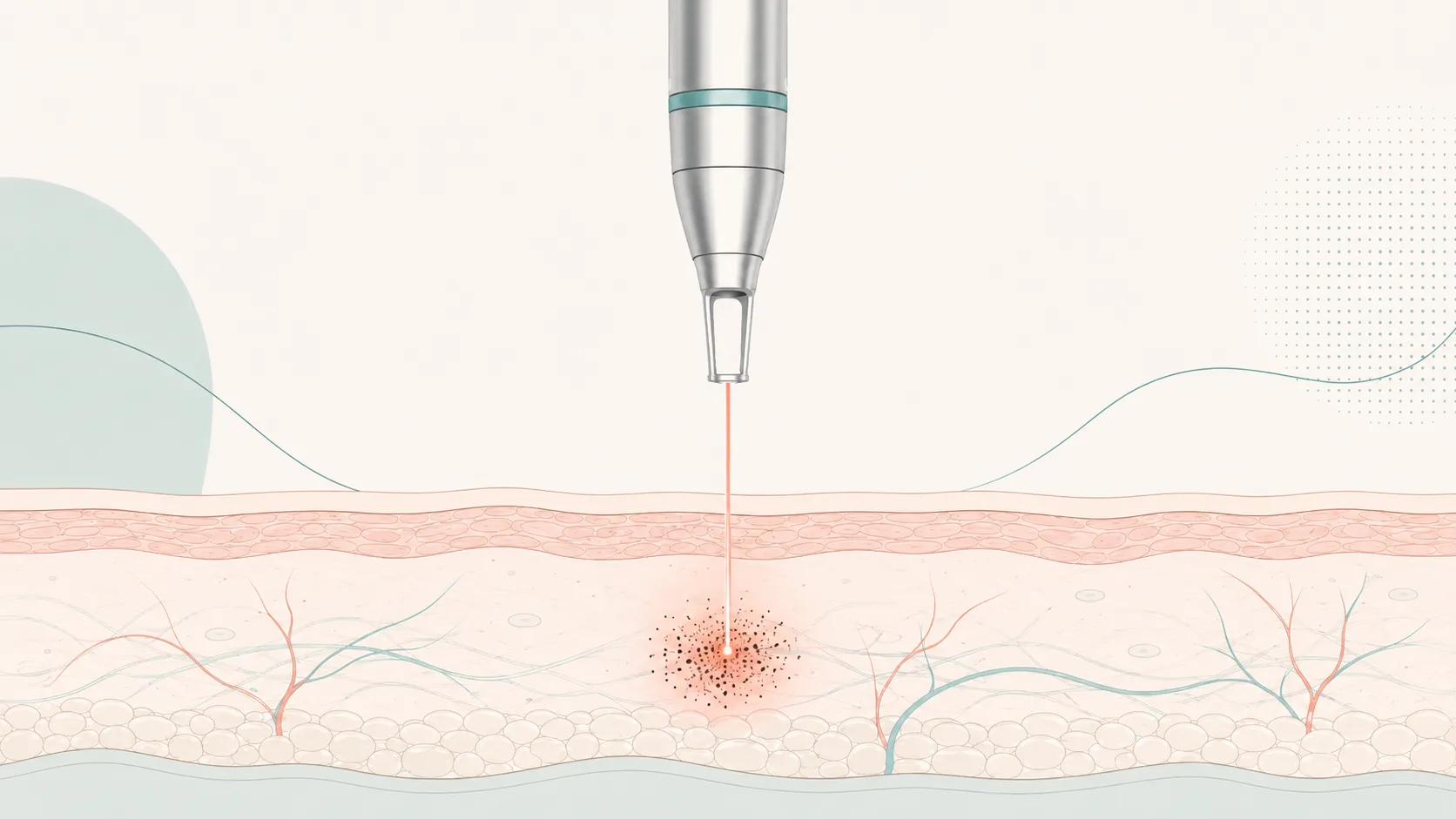
What “picosecond” actually means
A picosecond is a trillionth of a second. The name refers to how quickly the laser delivers each pulse of energy — much faster than the older “nanosecond” (Q-switched) lasers that came before it.
Why does pulse speed matter? Older lasers rely mostly on heat to break down pigment. Because a picosecond pulse is so short, more of its effect comes from a rapid photomechanical action — a pressure effect that helps fragment pigment into smaller particles — with comparatively less heat spread to the surrounding skin. In principle, smaller fragments can be cleared more readily by the body, and less heat can mean a gentler effect on nearby tissue.
That is the theory clinics describe. In practice, “pico” is a category of devices from several manufacturers, not a single machine, and results depend far more on the correct diagnosis, settings and operator than on the label on the device.
What clinics use it for
Pico laser is used as one option — not the only option — for several concerns:
- Sun-related pigmentation such as freckles and solar lentigines (sunspots).
- Certain dermal or mixed pigmentation, where a doctor judges it appropriate.
- Tattoo lightening and removal, where the same pigment-fragmenting principle applies to tattoo ink.
- Skin texture and acne scarring, when used with a fractional lens attachment that creates controlled micro-zones in the skin.
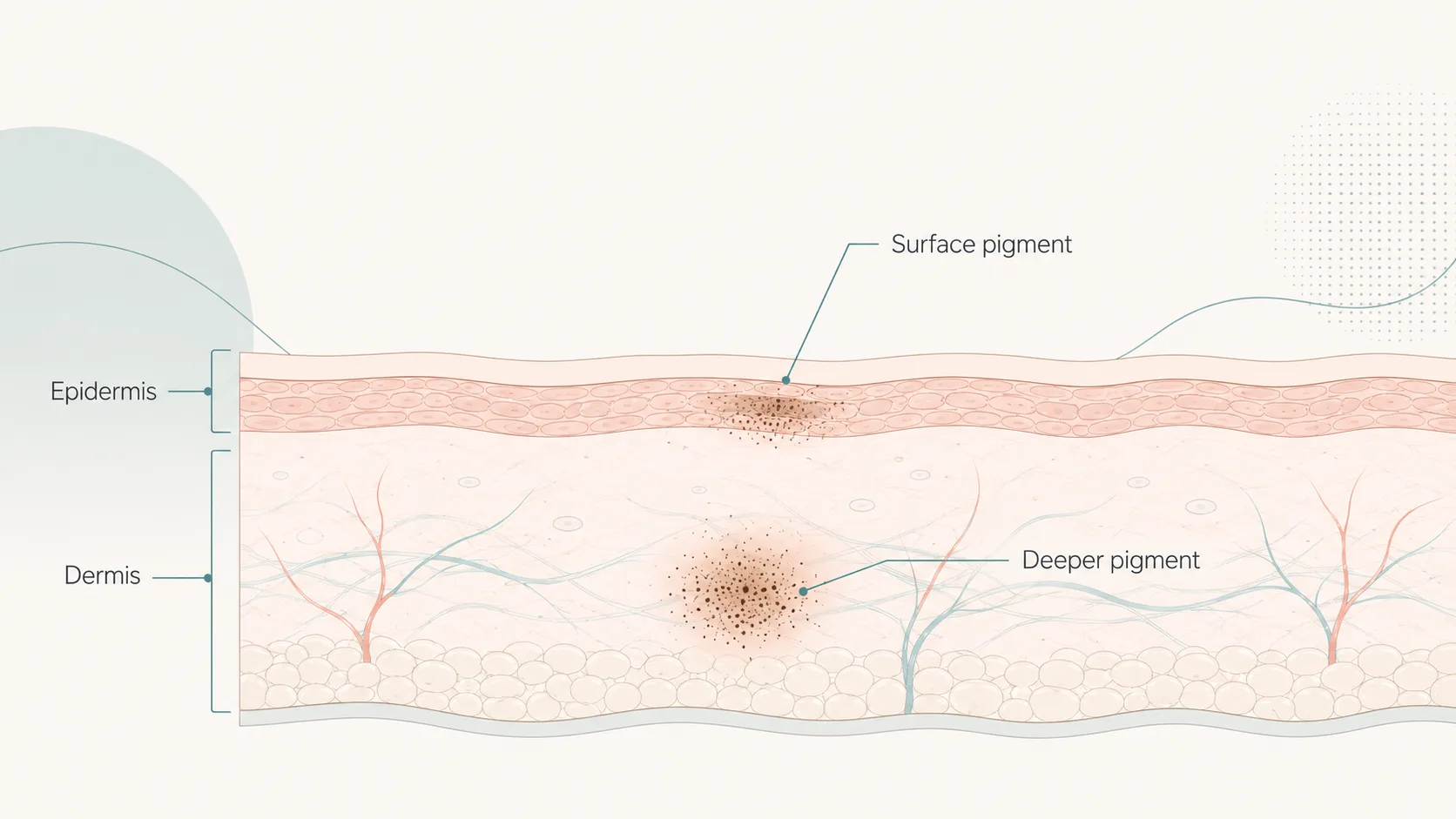
Crucially, not all pigmentation is the same, and the wrong treatment on the wrong diagnosis can make some pigmentation worse rather than better. A proper assessment is what determines whether pico is suitable at all — and sometimes the answer is that a non-laser approach is the better starting point.
A specific caution on melasma
Melasma — the patchy, often hormonal pigmentation many people in Singapore’s climate deal with — deserves its own note. Dermatology centres, including the National Skin Centre, describe the usual first step as topical treatment and diligent sun protection, with procedures considered only in selected cases. Melasma is also known to be easily aggravated: heat and light can worsen it, so an aggressive laser approach can sometimes set it back.
None of this means laser is never used for melasma — only that it is not automatically a first move, and that a doctor’s diagnosis should come before any device is chosen.
What a typical course looks like
Pico laser is generally delivered as a course of several sessions spaced a few weeks apart, rather than a single visit. The exact number depends on your concern, your skin and how it responds — it is decided with your doctor at consultation, not a fixed figure anyone can promise in advance.
A responsible sequence usually looks like: consultation and diagnosis first, sometimes a test patch, then treatment sessions with review points along the way so the plan can be adjusted. Outcomes vary between individuals, and no reputable clinic can guarantee a specific result.
What happens during a session
While details differ by clinic and concern, a session commonly involves:
- A short review of your skin and how you responded to any previous session.
- Cleansing, and sometimes a numbing cream for comfort, depending on the area and settings.
- Protective eyewear, since laser light and the eyes do not mix.
- The treatment itself, often described as a warm, snapping or tingling sensation, usually over a few minutes for a small area.
Ask your clinic what the session will feel like for your skin type and area, and what they do to keep it comfortable and safe.
Downtime and aftercare
This is general information, not advice for your case — how your skin responds can differ. That said, people commonly report temporary redness after treatment, and treated spots may look slightly darker before flaking away over the following days. Aftercare typically centres on gentle skincare and strict sun protection, because sun exposure is one of the main things that undermines pigment treatment and can trigger new pigmentation.
Your clinician should walk you through preparation and aftercare — including sun protection, what to avoid, and what is normal versus what should prompt a call back — before you start.
Risks and side effects worth understanding
Every energy-based treatment carries some risk, and pigment lasers on Asian skin call for particular care:
- Post-inflammatory hyperpigmentation (PIH) — the skin responding to treatment by producing more pigment — is a recognised risk, and darker or Asian skin types can be more prone to it. This is one reason correct settings and an experienced operator matter so much.
- Hypopigmentation — lighter patches — can also occur.
- Redness, swelling, crusting or, rarely, blistering in the treated area.
- Disappointing or uneven results, or the need for more sessions than hoped.
The single biggest protection against these is not the brand of the device but the diagnosis and the hands using it: the right assessment, conservative settings, and a doctor who will tell you when a treatment is not appropriate.
Who may not be a candidate
Suitability is a medical decision, and your doctor will ask about things that can affect safety — for example recent sun exposure or tanning, pregnancy, photosensitising medication, a history of certain pigmentation or scarring responses, or active infection or inflammation in the area. The honest answer for some people is that pico is not the right tool, or not right yet. A clinic willing to say so is a good sign.
How it fits alongside other options
Pico is one instrument in a wider toolkit. Depending on the diagnosis, a doctor might discuss other pigment lasers, topical prescription creams, chemical peels, or simply better sun protection and time. We do not rank these or claim one is superior — the point is that a good consultation compares options for your concern rather than starting from the device.
For a broader look at approaches to pigmentation, see our guide to pigmentation treatment options and the pigmentation overview.
How it is regulated in Singapore
Aesthetic lasers are taken seriously by regulators. Medical laser devices are overseen as medical devices by the Health Sciences Authority, and aesthetic laser treatment should be carried out under a registered medical practitioner in an appropriately licensed clinic. The Singapore Medical Council also publishes guidelines classifying aesthetic procedures by the strength of the clinical evidence behind them — useful context when a treatment is being recommended to you.
Before booking, it is reasonable to confirm the treating doctor is SMC-registered and the clinic is HCSA-licensed. Our how we verify page explains what that means and how to check it yourself, and the clinic directory lists licensed clinics factually.
What it costs
Pico laser is usually priced per session, but the total depends on the number of sessions, the area treated, the specific device and the clinic — so a single per-session figure rarely tells the whole story. General, indicative ranges are on our price guide, and our Pico laser cost guide explains what drives the price and how to read a quote. Treat any figure as rough budgeting only; a real price can come only from a clinic after assessing your skin.
A practical note: be cautious of pressure to commit to a large multi-session package before anyone has assessed whether the treatment even suits you.
Questions to ask before booking
- What is my actual diagnosis, and is pico the most appropriate option for it — or is something else a better first step?
- Is the treating doctor SMC-registered, and is the clinic HCSA-licensed?
- How many sessions are likely for my concern, and what is the total expected cost (not just the per-session price)?
- What are the specific risks for my skin type, and how do you reduce the chance of PIH?
- What does aftercare involve, and what should I do about sun protection?
- What happens if my skin reacts, or if I do not see the change we discussed?
Common questions
Is pico better than older lasers? It is different, not automatically better for everyone. The shorter pulse works in a more photomechanical way and can be gentler on surrounding skin, but the right choice depends on your diagnosis and the operator’s judgement, not the label.
How many sessions will I need? It varies with your concern and skin, and is decided with your doctor rather than a fixed number anyone can state upfront.
Is there downtime? Often little, but responses differ. Temporary redness is common, and treated spots may darken briefly before flaking. Ask your clinic what to expect for your skin.
Can it treat melasma? Sometimes, but not usually as a first step. Melasma is often managed with topical treatment and sun protection first, and can be aggravated by the wrong approach — so diagnosis comes before any device.
Are the results permanent? No treatment stops your skin from ageing or from making new pigment, especially with ongoing sun exposure. Discuss realistic expectations and maintenance with your doctor.
For how the treatment is described in brief, see the Pico laser overview. To understand what a licensed clinic and registered doctor actually mean, see how we verify.